News, guides, and product updates.
How to accept payments, settle in stablecoin, and grow across risk tiers.
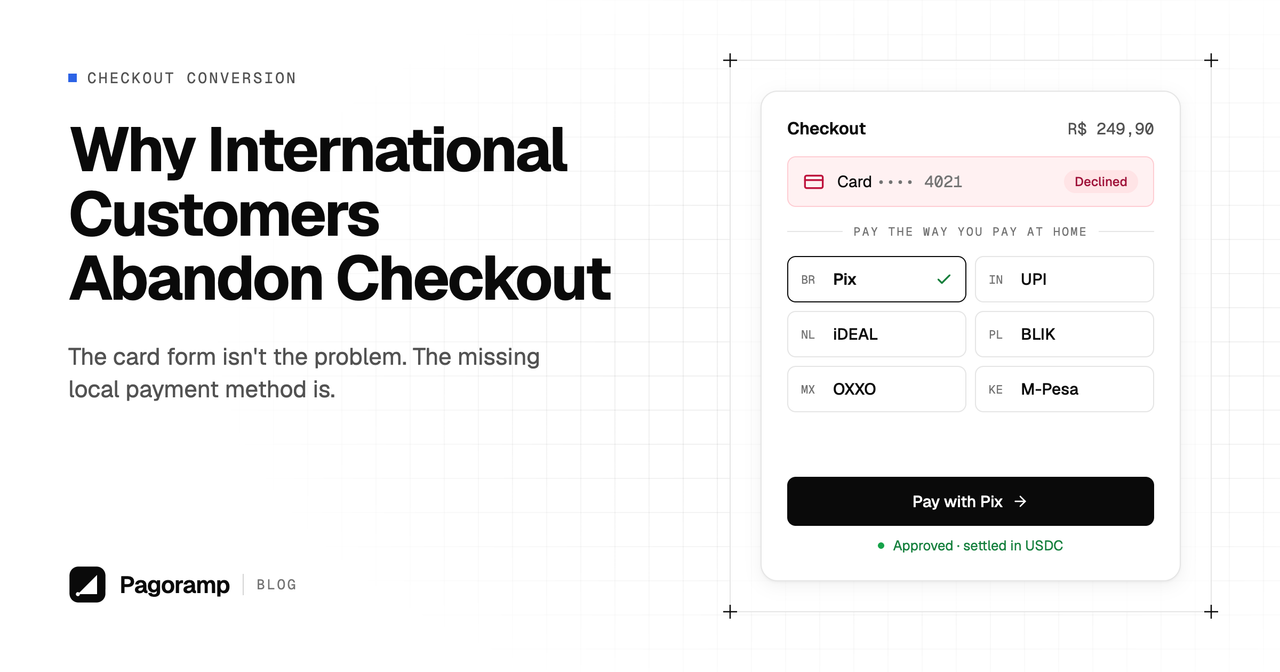
Why international customers abandon checkout
Baymard puts average cart abandonment at 70.22%. For international customers the causes are specific: a missing local payment method, a declined cross-border card, or a price that changes at the last step. Here is how to find and fix each one.
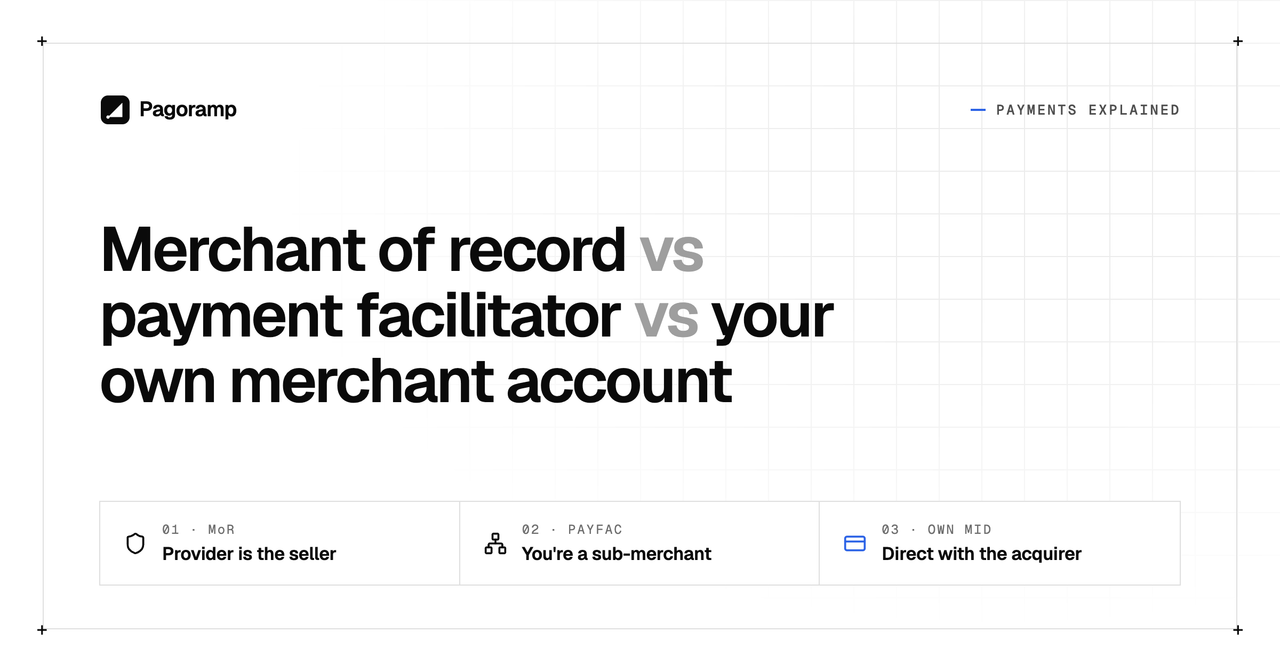
Merchant of record vs payment facilitator vs your own merchant account
What is a merchant of record, and how does it compare to a payment facilitator or your own merchant account? Who carries chargebacks and tax, how fast you go live, and which model fits your business.
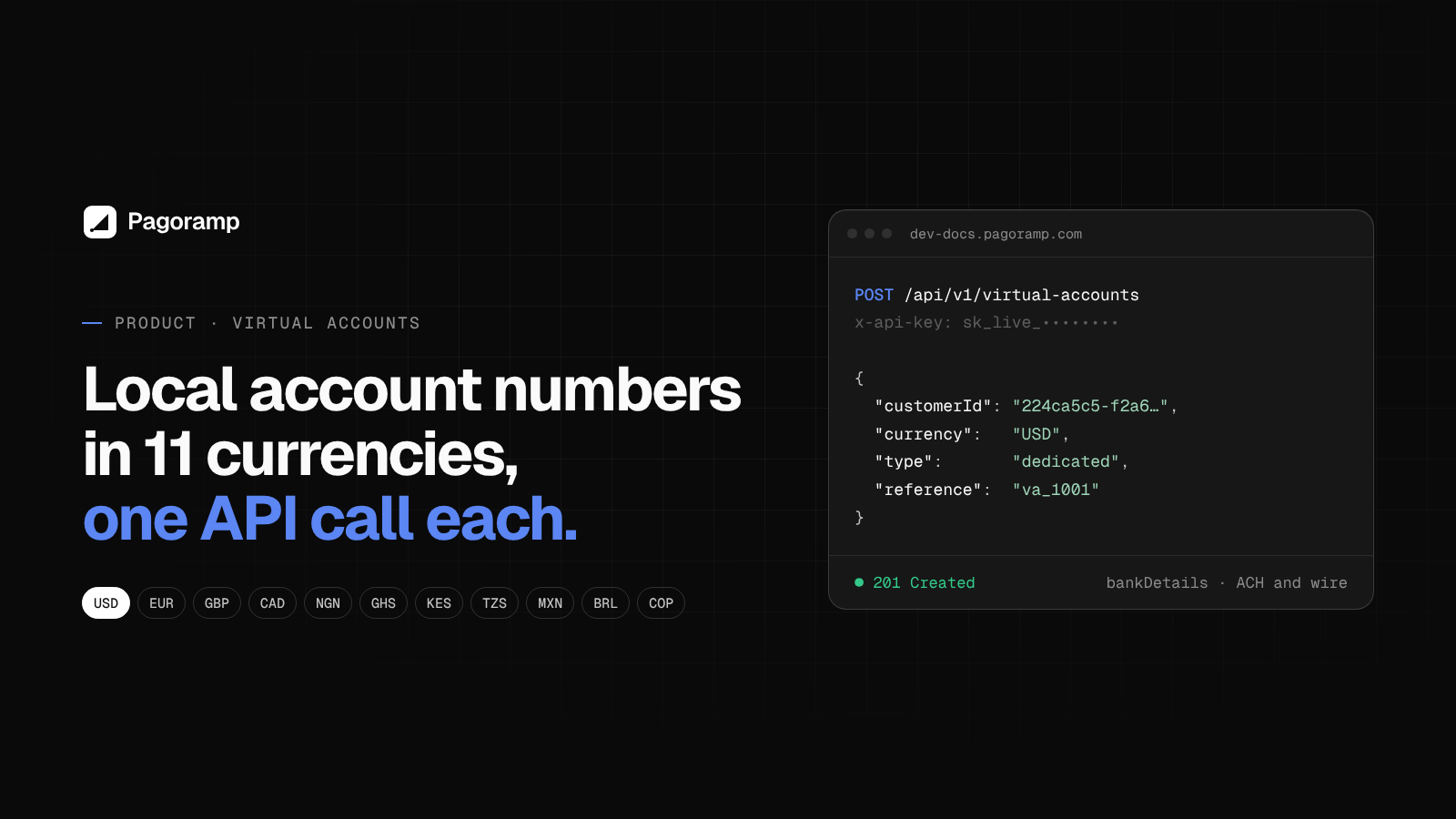
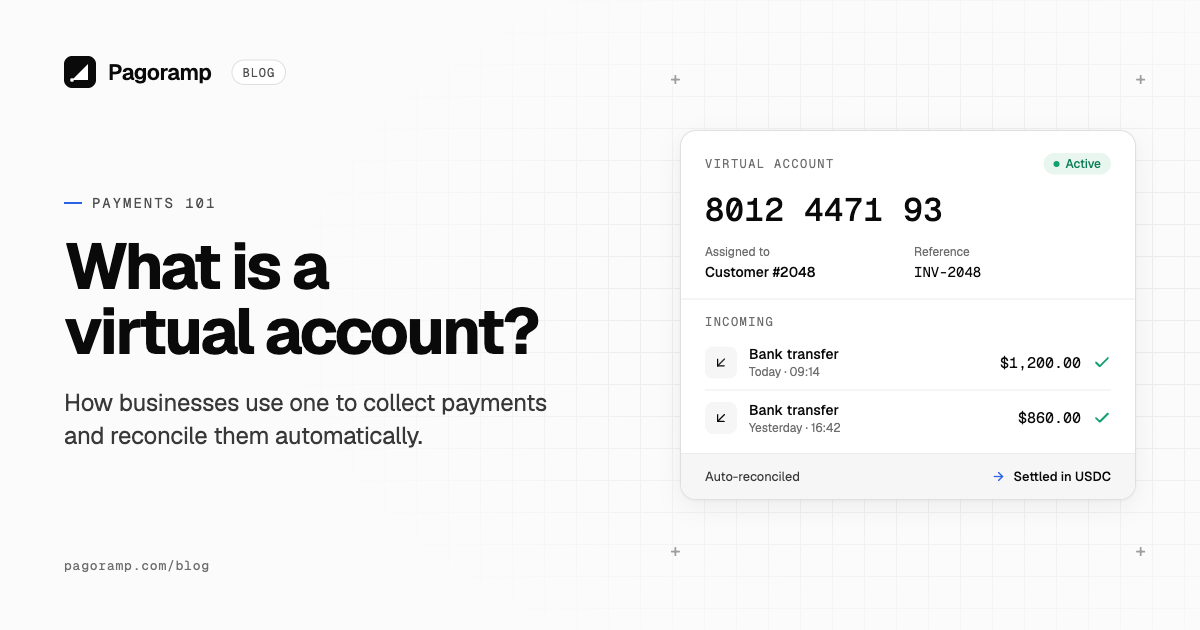
Virtual accounts: a local account number for every customer, in 11 currencies
Give each customer their own local account number in USD, EUR, GBP, NGN, BRL and more. Payments match automatically. Settle in stablecoin or to your bank.

What to actually look for in a high-risk merchant account provider
A low headline rate means little if it comes with a 10 percent rolling reserve held for 180 days. Here is what actually determines whether a high-risk merchant account provider is a good fit, beyond the number on the pricing page.

How to accept crypto payments without running a separate crypto stack
Accepting crypto usually means running a second payment stack alongside your card processor: a separate wallet, separate reconciliation, and a separate settlement process. Here is how to accept it through the same integration you already use for cards.

Best Stripe alternatives for high-risk and emerging-market merchants
Stripe’s acceptable use policy excludes an entire tier of legal businesses, and its coverage of emerging-market payment methods is uneven outside its strongest regions. Here is how the alternatives actually compare on risk appetite, settlement, and local payment method support.

Merchant cash advance alternatives
A merchant cash advance can carry the equivalent of 40 percent or more in effective annual cost once factor rates and daily withholding are converted to plain terms. Here is how working capital against your processing volume compares, and what to check before you sign anything.
Stablecoin settlement vs. traditional payouts
A traditional payout can sit in transit for one to five business days. Stablecoin settlement moves the same funds in minutes, any day of the week. Here is what actually changes for merchants who switch, and when local payout still makes sense.